

During his official visit to India, Belgian Prime Minister Bart De Wever singled out Silox as a strong example of successful Belgian-Indian industrial cooperation. His remarks recognised the Group’s growing role in lithium-ion battery recycling and critical metals recovery, and highlighted the strategic importance of Silox’s long-term ambitions in India.
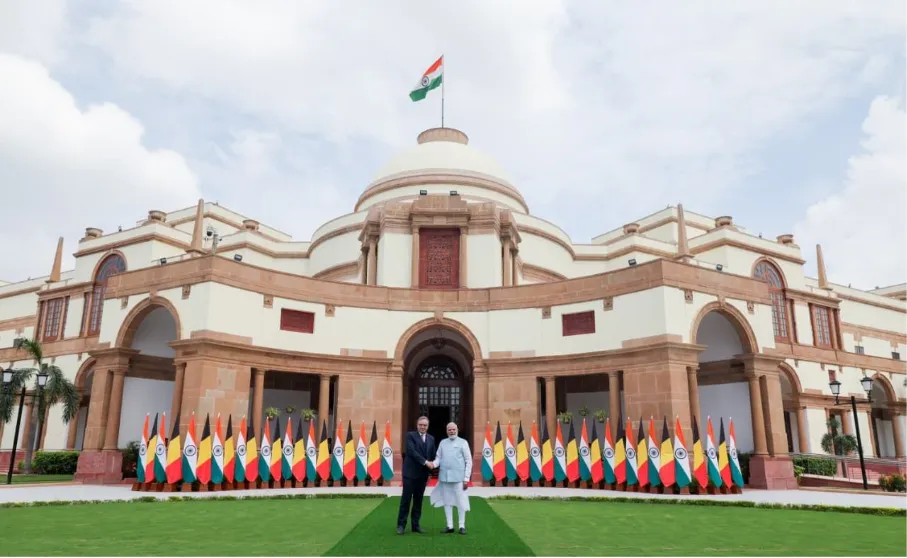
From 2 to 4 September 2026, Belgian Prime Minister Bart De Wever visited India as part of an official mission focused on strengthening economic, political and strategic ties between the two countries.
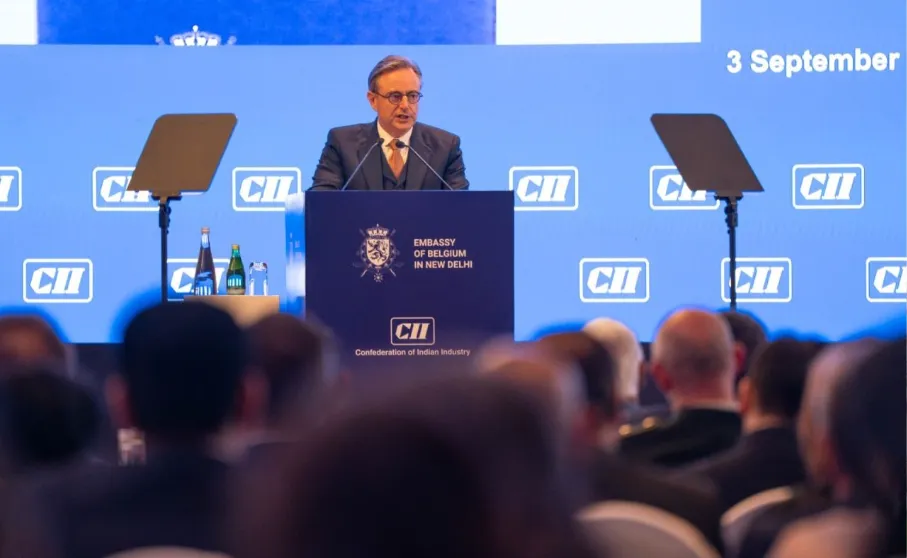
Speaking to the Confederation of Indian Industry (CII) in New Delhi on 3 September, the Prime Minister stressed the importance of strategic openness, diversification and trusted international partnerships in an increasingly fragmented global economy.
Against this backdrop, he highlighted the role Belgian companies can play in supporting India’s ambitions across key sectors including industry, energy, advanced manufacturing, chemistry and the recovery of critical raw materials.
Silox recognised as a strong example of Belgian-Indian cooperation
Silox was among the Belgian companies specifically mentioned by the Prime Minister as an example of how industrial partnerships between Belgium and India can build ambitious projects together.
Referring to the Group’s activities in India through Silox India and the newly established NAN Silox GreenMet joint venture, Bart De Wever said:
“Take Silox, which within five years, together with an Indian partner, will account for ten per cent of India’s lithium-ion battery recycling capacity. That is what strong partnership looks like.”
For Silox, this recognition reflects both the scale of the Group’s ambitions in India and the growing strategic importance of battery recycling and critical metals recovery.
It also places the NAN Silox GreenMet project within a much broader economic context, as Belgium and India look to deepen cooperation in industries that are increasingly central to energy security, industrial resilience and the transition to a more circular economy.
Developing a circular value chain for critical metals
The rapid growth of electric mobility and energy storage is driving global demand for strategic materials such as lithium, cobalt, nickel and manganese.
Ensuring that these resources can be efficiently recovered and returned to the industrial value chain is therefore becoming increasingly important.
This is at the heart of NAN Silox GreenMet’s ambition: to build a significant lithium-ion battery recycling and critical metals recovery operation in India, combining technological expertise with strong local industrial capabilities.
For Silox, the project is a natural extension of the Group’s long-standing expertise in hydrometallurgy and non-ferrous metal recovery.
It also reflects a broader commitment to developing industrial solutions that make better use of resources, reduce dependence on primary raw materials and support more resilient supply chains.
A milestone for Silox’s international development
Being recognised by the Belgian Prime Minister in front of leading representatives of Indian industry marks an important milestone for Silox.
More broadly, it highlights the contribution that Belgian industrial expertise can make to some of the major challenges facing the global economy today: securing access to critical materials, accelerating circularity and building strong international partnerships around innovative technologies.
Through Silox India and NAN Silox GreenMet, Silox is continuing to expand its international footprint while staying true to its core ambition: combining chemical innovation, industrial expertise and circular solutions to help shape the critical raw material value chains of the future.